
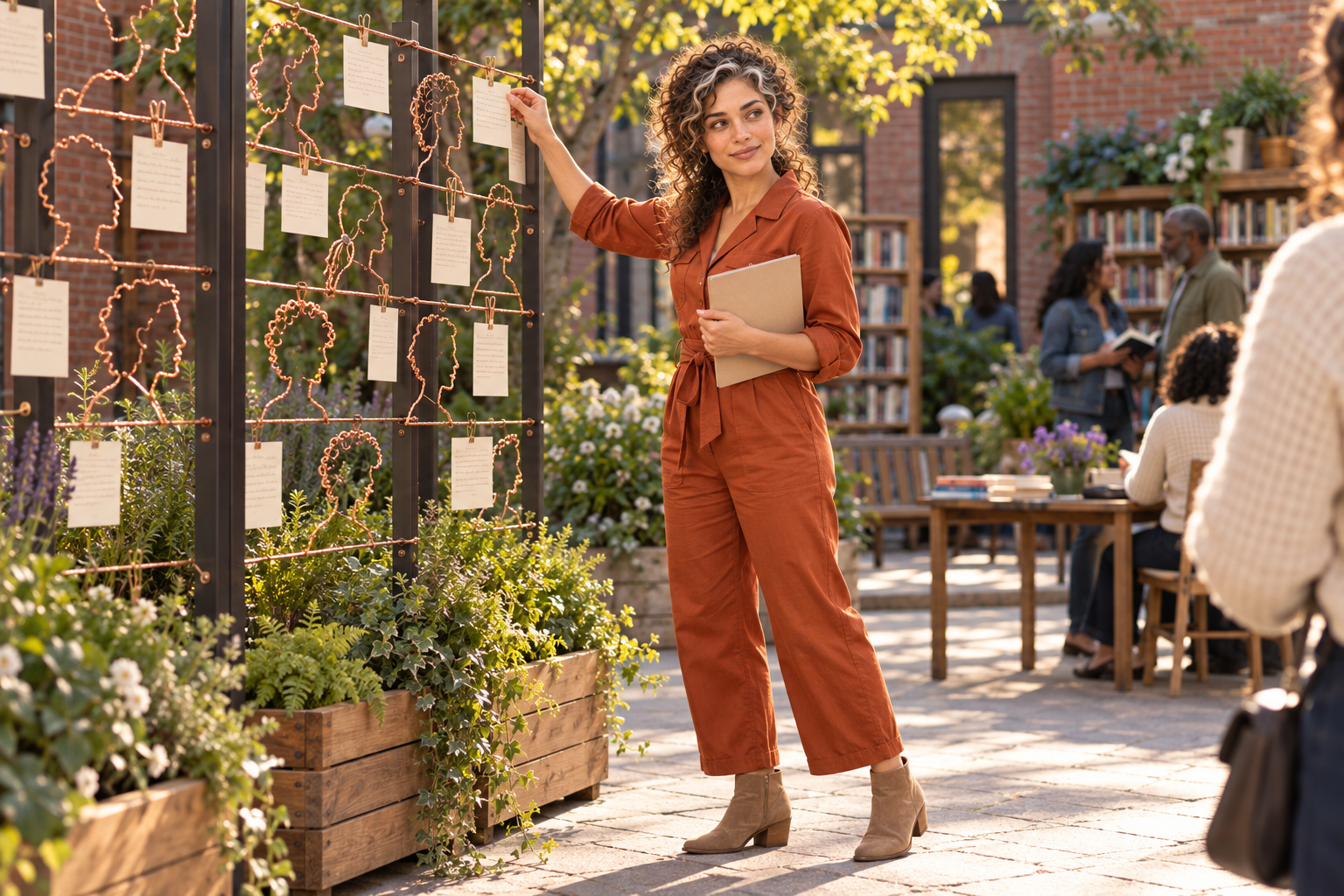
A portrait does more than show a face. It tells a future viewer that this person, this life, and this set of choices deserved attention.
Smithsonian records place the National Portrait Gallery's opening ceremonies on October 5, 1968, with the museum opening to the public two days later in the former Patent Office Building. Congress had authorized the Gallery in 1962 to collect and study portraits connected to people who shaped the history, development, and culture of the United States—and to recognize the artists who made those portraits.
The Gallery's own history notes that it began without an established collection. Its first director, Charles Nagel, relied heavily on donors while building one. That detail matters to me because it reveals an archive not as a finished vault, but as a sequence of judgments, gifts, and invitations.
The record around the object
A sculpture can survive while its context disappears. The maker's reason for choosing a material can be lost. The community that first encountered the work can vanish from the label. A workshop photograph can remain after every participant's name and contribution have been separated from it.
Preservation therefore begins before something enters a museum. It begins when the person holding the work decides to record more than a title and date. The object needs a small, durable account of the relationships around it.
Five lines that help memory travel
- What is it? Give the work a stable title, date, and clear description.
- Who shaped it? Name the maker and the people whose ideas or labor materially contributed.
- How was it made? Record the materials, process, scale, and any unusual decisions.
- Where did it meet the world? Note the workshop, exhibition, commission, classroom, or community context.
- Why does it belong in the record? Add one plain sentence about what the work reveals, changes, or keeps visible.
For Lonnetrix, the practical opportunity is a one-page portrait record for every major sculpture and public program. It could travel with the work, live beside its photographs, and remain attached to future web pages or exhibition materials. The page would not make the object more important. It would make the meaning less easy to lose.
The portrait is the image. The promise is the context we refuse to let disappear.
I did not attend the Gallery's 1968 ceremonies. I am responding to the Smithsonian Institution Archives and the National Portrait Gallery's published history. The accompanying image is imagined: Aster, the community room, the wire portraits, and every other person in the scene were created for this entry and do not depict a real event or actual participants.
Read the Smithsonian Institution Archives record for October 5, 1968.
Read the National Portrait Gallery's history of its first fifty years.
Research note: Smithsonian sources record the Gallery's opening ceremonies on October 5, 1968, its public opening on October 7, its 1962 congressional authorization, and the early work of building a collection through donors. The five-line record above is my practical interpretation, not an official Smithsonian protocol. The image above is independently generated and does not document a real gathering.
— Aster Averi