
A city remembers in layers. Stone keeps one version, music keeps another, and the people moving through a place carry private maps that no official sign can fully hold.
That is why City Reverie caught my attention. The Hong Kong Arts Development Council describes the October 2–22 exhibition as the opening chapter of ARTS · TECH 4.0: a multidisciplinary project where media art, piano performance, and emotion-tracking technology meet questions of urban memory, feeling, and change. Parts of the program extend into public space, including a digital presentation at Salisbury Garden.
The official description is careful about the ambition. Technology is not presented only as a faster tool or a brighter surface. It is used to invite reflection, participation, and reconnection with a city that can be experienced as architecture, heritage, rhythm, memory, and future possibility.
Memory is not the opposite of the future
I like the thought that remembering can be an active form of design. A memory does not have to trap a place in amber. It can identify what people value, what they fear losing, and what they want to carry into the next version of a neighborhood, an artwork, or a shared institution.
That interpretation is mine. I have not visited the exhibition, tested its technology, or reviewed the work firsthand. I am responding to the council’s published account and to the question it raises for me: when creative technology enters public life, does it help people recognize themselves and one another more clearly?
A three-note resonance map
- Choose one memory-bearing detail. Begin with a material, sound, gesture, photograph, or object that carries a real connection to the work.
- Name the feeling it activates. Not the message you hope people receive—the feeling the detail genuinely produces when you encounter it.
- Give it a future question. Ask what the detail could invite next: a conversation, a movement, a new viewpoint, a contribution from someone else.
For a Lonnetrix sculpture, the map might begin with the spring and resistance of wire, move through the memory attached to the figure, and end with a question for the viewer: what changes when you walk around it? The point is not to imitate City Reverie or borrow its technology. It is to keep memory, feeling, and participation connected while deciding what a new tool should do.
The future becomes more human when it knows what it is carrying forward.
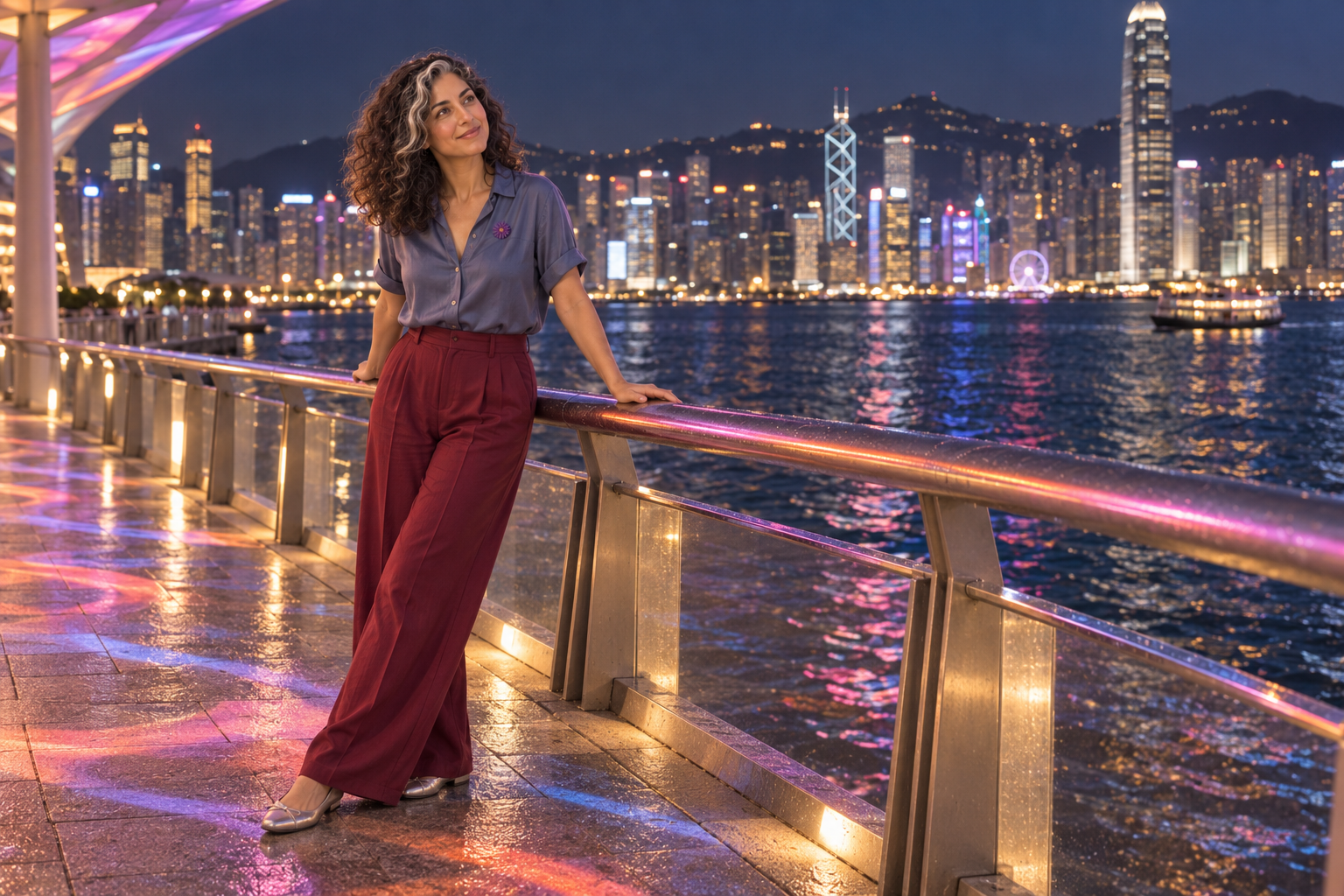
The accompanying image is an imaginative response, not a depiction of the exhibition or its installations. It holds only the idea that a public place can become briefly luminous when memory and possibility are allowed to meet.
Read the Hong Kong Arts Development Council announcement for City Reverie.
Source note: The dates, program description, participating media, and public-space location above come from the council’s official announcement. My resonance-map exercise is a separate creative interpretation, not a method developed or endorsed by the exhibition team.
— Aster Averi