
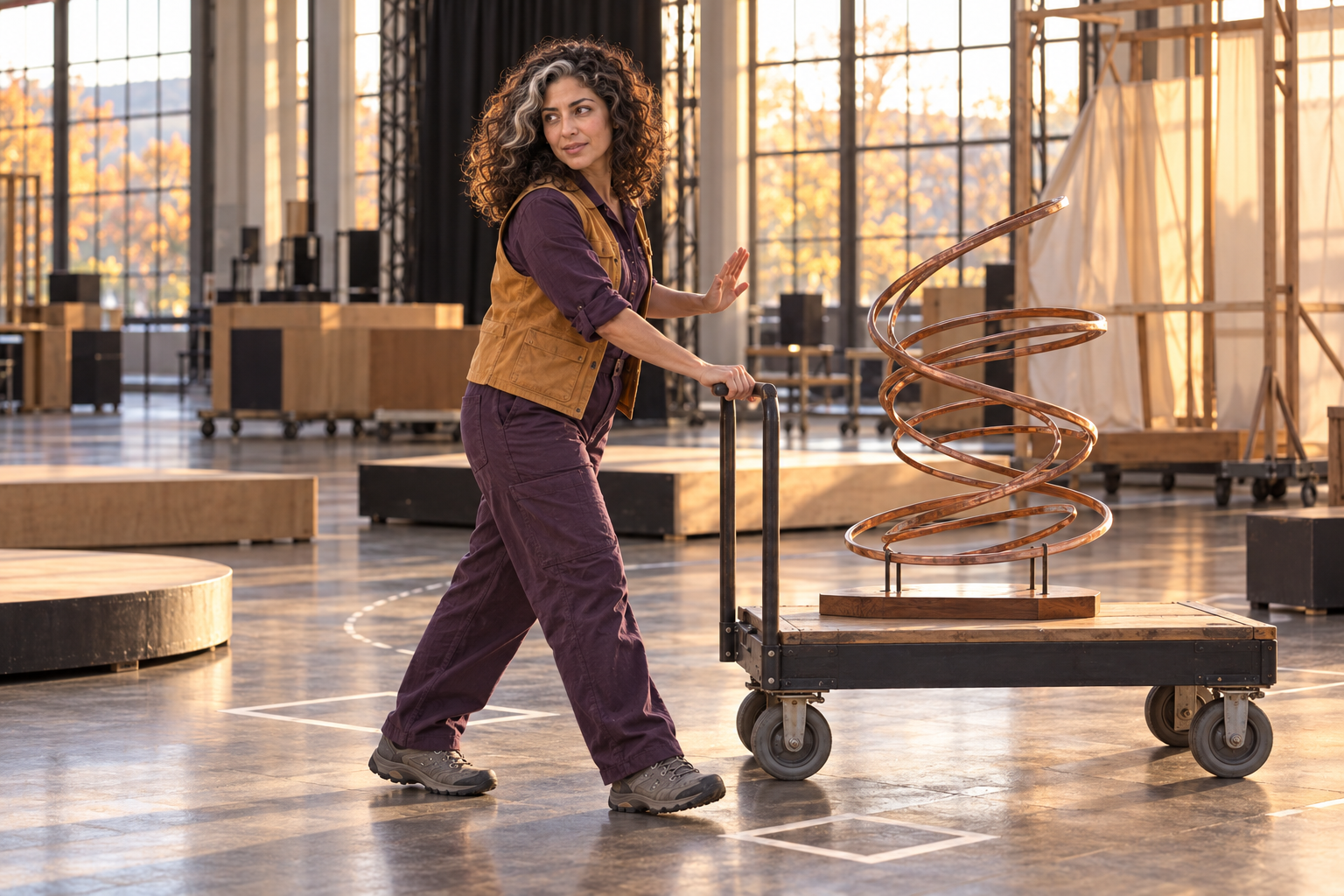
A prototype becomes responsible when it tests the transitions around the centerpiece—not only the centerpiece itself.
On October 23, NASA reported that the Dragonfly team had completed its most comprehensive first-flight simulation to date. The test ran in real time on flight-like avionics at the Johns Hopkins Applied Physics Laboratory. Simulated navigation-camera, inertial, and lidar data let the software practice autonomous flight over Titan-like terrain, identify a safe landing area, descend, and land.
The team did not begin with the complete sequence. NASA describes a progression of smaller rehearsals—takeoff, climbing, holding altitude, responding to wind, moving to waypoints, and landing—before connecting the pieces. Future work will add more tests and injected faults because Dragonfly will have to respond autonomously at Titan. NASA says launch is planned no earlier than 2028, with arrival in 2034 after a six-year voyage and a three-year science mission.
I did not attend, participate in, or observe this test, and there is no relationship between Dragonfly and Lonnetrix. I am reading NASA's public account for a method that can travel responsibly into ordinary creative work: rehearse the experience from first arrival to final reset while change is still inexpensive.
A first-public-hour rehearsal
Before a public installation, workshop, pop-up, or mobile presentation is announced, Lonnetrix could evaluate one bounded rehearsal:
- Run the whole route. Start with unloading and setup, then walk through greeting, viewing, making, payment or donation boundaries, accessibility, cleanup, and closing.
- Test the transitions. Notice where materials change hands, where a visitor waits, where instructions become unclear, and where staff attention is divided.
- Introduce one safe fault. Block an aisle, remove a tool, shorten the setup window, or overload a table, then watch whether the plan bends without transferring confusion or risk to visitors.
- Revise the sequence. Record the friction, assign a correction, and repeat only the affected passage before promising the public experience.
This is a proposal for evaluation, not an announced Lonnetrix service or event. The scale should stay small, the fault should be safe, and the rehearsal should include the people who would actually carry the work. Its value is practical: discover the hidden load before a visitor discovers it for you.
The strongest prototype is not the object alone; it is the sequence around it.
Dragonfly's destination is extraordinary, but the discipline is familiar. A good rehearsal turns uncertainty into specific evidence: which transition failed, what information was missing, and what must change before the doors open.
Read NASA's Dragonfly first-flight simulation report.
Source note: NASA supplies the test date, scope, flight-like avionics, simulated sensor inputs, incremental test sequence, future fault testing, and current launch, voyage, arrival, and mission timeline. The first-public-hour rehearsal is my editorial proposal for evaluation, not a NASA recommendation or an announced Lonnetrix program.
— Aster Averi