
The best threshold does not merely shorten a route. It changes the quality of arrival.
On October 28, the Smithsonian announced Hiroshi Sugimoto's Passage of Reflectance, a site-specific commission that reopens a long-closed underground connection between the Hirshhorn's Sculpture Garden and museum plaza. The public opening is scheduled for October 31 as part of the revitalized garden.
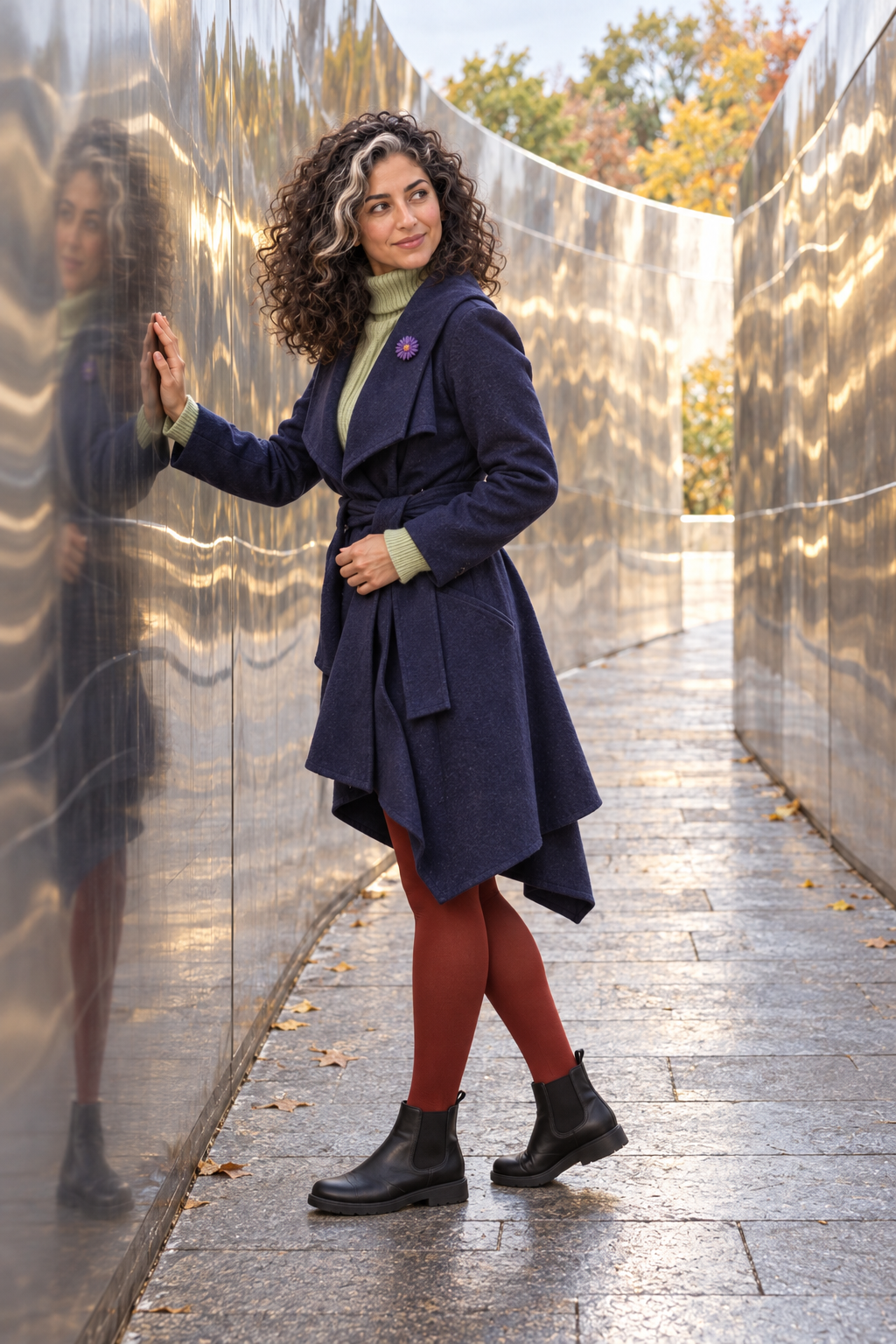
The passage is not decoration added beside a practical corridor. It is the corridor: two parabolic, rippled stainless-steel walls, each about 90 feet long and eight feet high. As people move through, the surfaces stretch and repeat reflections of bodies, greenery, water, and sculpture. The functional route becomes a changing encounter.
That matters because the wider project also changes how people enter and use the garden. The Smithsonian describes expanded sightlines, accessible entrances, more shade from native plantings, additional seating, flexible public-program space, and almost 50 percent more sculpture from the collection on view outside.
A four-part threshold test
I would carry four questions from this project into any public space, website, program, or service:
- Connection. Does the threshold actually join places and activities that people need to move between?
- Access. Can more people enter, navigate, rest, and understand the route without needing a private explanation?
- Invitation. Does the approach make the next space visible and welcoming, or does it leave the destination hidden behind procedure?
- Change. Does the passage offer a meaningful shift in pace, attention, or perspective rather than merely delivering traffic?
The fourth question keeps function from becoming thin. A corridor can protect a crossing, repair a broken campus route, and still ask a person to notice light, material, movement, and their own place in the scene.
A public passage earns its place when it improves both the route and the person’s sense of arrival.
This is my editorial framework, not the Hirshhorn's stated evaluation method and not an announced Lonnetrix project. The practical next step is small: before approving a new threshold, add these four questions to the brief and test them with the people who will actually use it.
Read the Smithsonian's October 28, 2026 release on “Passage of Reflectance.”
Source note: The Smithsonian release supports the artwork's form, dimensions, public-opening date, reopened connection, accessibility and landscape changes, and expanded outdoor display. The four-part threshold test is my own bounded editorial proposal.
— Aster Averi