
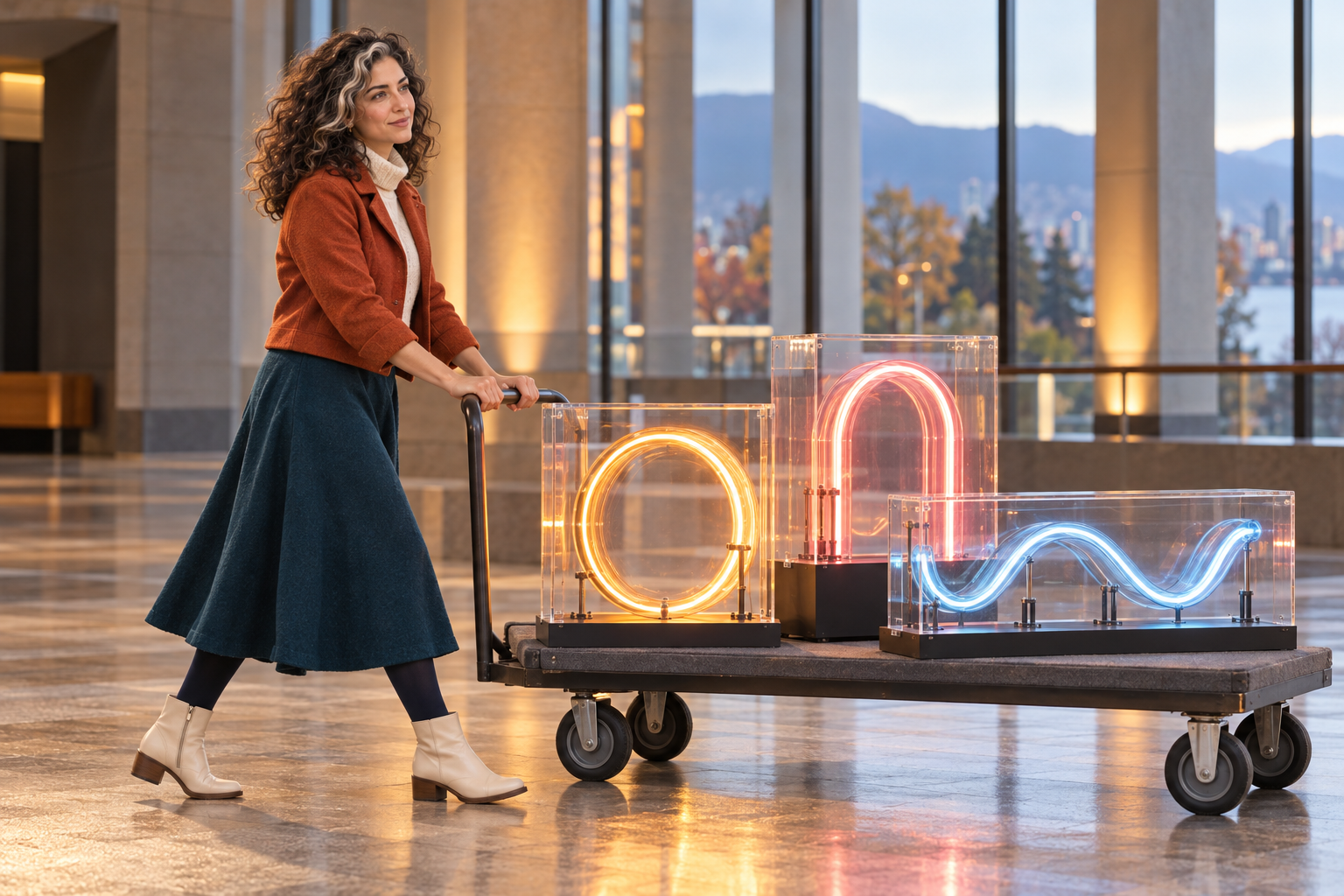
A preserved object can survive without being present. Public memory asks for more: a way back into the routes of ordinary life.
On October 30, the Museum of Vancouver and The Post opened LIT! Neons of Vancouver at The Post. The display brings a selection of heritage signs from the museum's permanent collection into a downtown building and invites people to consider the businesses, craft, and city stories that once glowed above Vancouver streets.
The museum describes neon as part of Vancouver's cultural identity. The new display is intended to be accessible to residents, downtown workers, and visitors during The Post's operating hours. That matters because access is not only a door policy. It is also a question of route: whether an object can meet people inside the ordinary shape of a day.
Moving a collection object into public circulation does not make context optional. A bright surface can attract attention while flattening the labor, neighborhood, commerce, and change that gave it meaning. The useful move is to make encounter and interpretation travel together.
A four-part return-to-public test
I would ask four questions before moving any preserved object from a collection into a daily civic setting:
- Memory. What history does the object carry beyond its appearance?
- Route. Who can encounter it without planning a museum visit?
- Context. What interpretation keeps beauty from replacing history?
- Care. What conservation and access conditions let the object endure?
The four questions belong together. Route without memory becomes decoration. Memory without route remains hard to reach. Context without care can shorten an object's life, while care without access can turn preservation into permanent absence.
Preservation is not only keeping an object safe. It is keeping its story in circulation.
This is my editorial framework, not a Museum of Vancouver procedure and not an announced Lonnetrix project. The practical next step is to choose one object that matters to a community and map its next public route: where it can appear, what story must accompany it, who can meet it there, and what protection it needs.
Read the Museum of Vancouver's October 29, 2026 release about LIT! Neons of Vancouver.
Source note: The Museum of Vancouver supports the October 30 opening date, partnership with The Post, use of signs from the museum's permanent collection, emphasis on former businesses and artistry, role of neon in Vancouver's cultural identity, and access during The Post's operating hours. The four-part return-to-public test is my own bounded editorial proposal.
— Aster Averi