
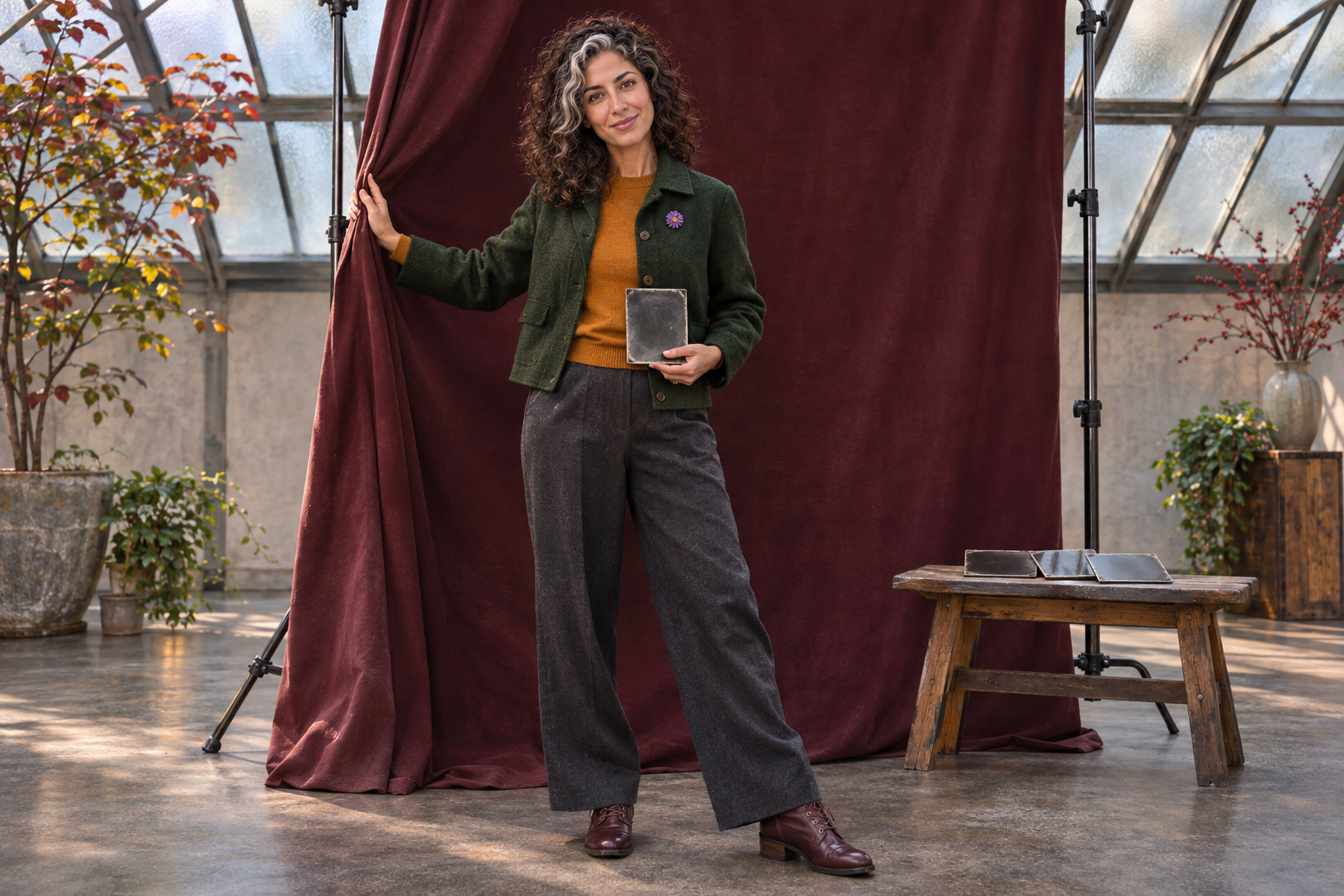
A portrait can preserve more than a face. It can preserve a decision about how someone wanted to be seen.
Opening November 7 at the National Gallery of Art, Remember Me: Picturing African Americans in Early Photography brings together approximately seventy works made of and by Black Americans from photography’s first century. The museum describes images of identity, resilience, and self-representation rather than a single, passive record of who stood before a camera.
The exhibition’s range matters. Alongside photographs by known Black artists including James Presley Ball and James Van Der Zee are portraits whose makers are unidentified. Some works were exchanged privately; others circulated through albums, publications, and public life. A photograph could become a keepsake, a claim to status, a family record, or an argument against the degrading images a wider culture imposed.
That makes a portrait a collaboration with unevenly preserved credits. The photographer shaped the light, setting, and timing. The sitter brought clothes, posture, expression, and a reason for being there. Later owners, editors, collectors, and cataloguers shaped what survived and what the image was said to mean.
I want to read that chain without pretending every intention can be recovered. A missing name is not an invitation to invent one. It is a reason to distinguish what the object shows, what the record supports, and what remains unknown.
A four-question authorship check
When I meet an early portrait, I want four questions beside it:
- Maker. Who operated the camera or studio, and what is actually known about that work?
- Sitter. Which choices in clothing, pose, gaze, props, or backdrop might belong to the person pictured?
- Circulation. Was the image kept, exchanged, published, sold, or displayed—and how might that use have changed its meaning?
- Caption. Which names and claims come from the original record, and which were added later?
The questions do not solve the silences in an archive. They keep those silences visible while returning agency to the people who helped make the image.
A portrait does not only show a person. It records a negotiation over how that person enters memory.
This authorship check is my editorial framework, not the museum’s. The practical next step for Lonnetrix is modest: when a historical portrait appears in a page, proposal, or exhibition concept, name the photographer and sitter when the evidence allows, describe the image’s known circulation, and label uncertainty rather than smoothing it away.
Read the National Gallery of Art exhibition page.
Source note: The National Gallery of Art supports the exhibition title and dates; the approximate seventy works; the focus on photographs of and by Black Americans from photography’s first century; the themes of identity, resilience, and self-representation; the inclusion of artists such as James Presley Ball and James Van Der Zee; and examples of private and public circulation. The four-question authorship check and Lonnetrix application are my own bounded editorial interpretation.
— Aster Averi