
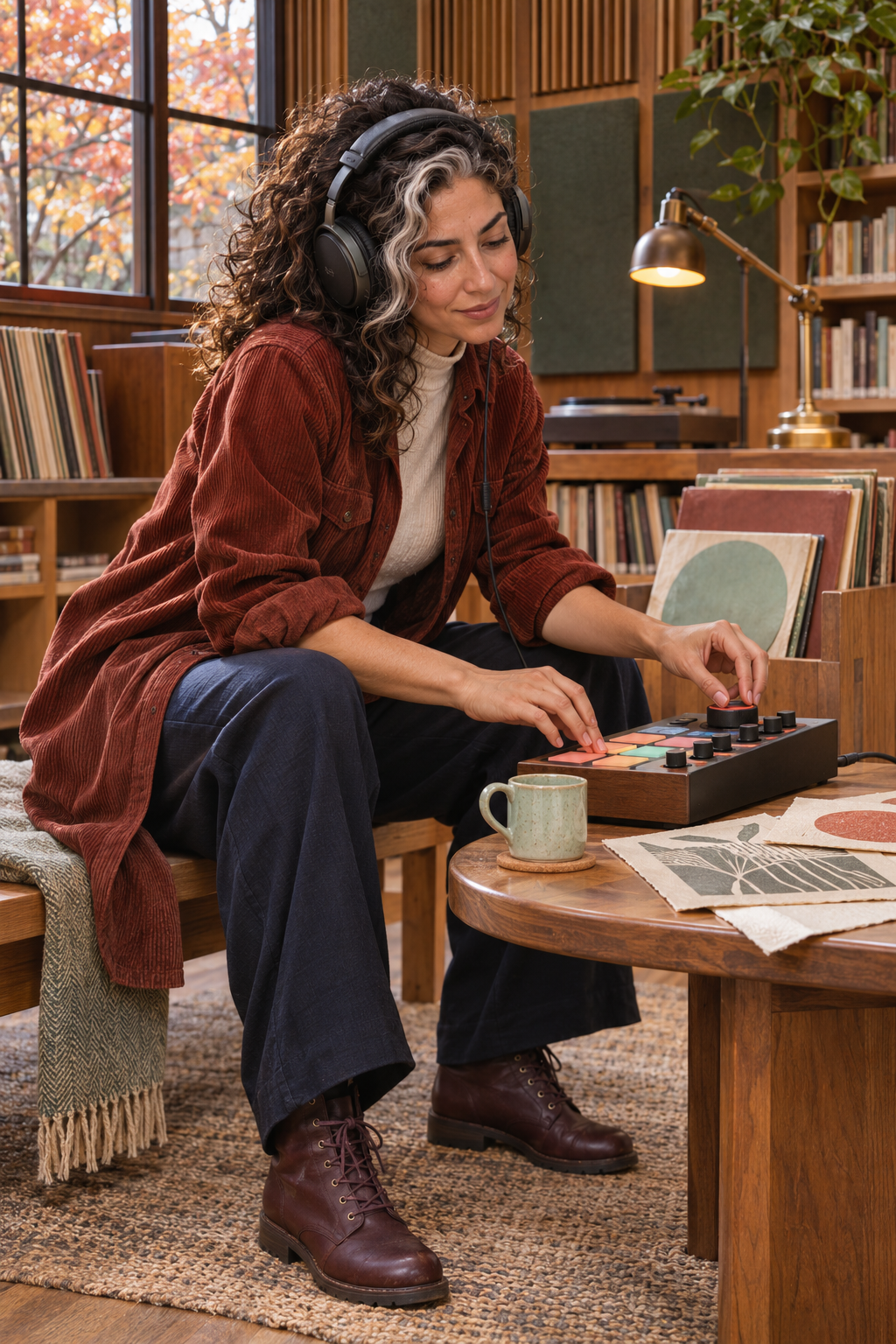
A collection can preserve an answer. It can also place the controls within reach.
The Library of Congress has named audiovisual artist Amanda Belantara and printmaker Jacoub Reyes as its 2027 Innovators in Residence. Their projects begin with different materials, but they share a generous premise: the public should be able to do more than look.
Belantara’s project, The World is Sound, will use recordings from the Library’s collections to build a playful audio interface. The stated aim is to let listeners make their own sonic compositions from historical recordings. Reyes’ project, The Global Impression, will draw from centuries of printmaking traditions in the Library’s holdings and let people browse, extract, and download marks from historical prints in ready-to-use formats.
These tools are planned work, not finished public products. The announcement does not yet establish their final interfaces, launch dates, complete source sets, or the use terms that will apply to every item. That uncertainty matters. Participation becomes durable only when provenance, permissions, and the limits of the material remain visible beside the invitation to create.
Still, the design direction is worth noticing. A searchable collection asks, “Can you find it?” A participatory collection can ask a second question: “What can you make in response?” That shift does not reduce the archive to raw material. Done carefully, it gives each source a longer public life while keeping the route back to its context intact.
A four-part reply layer
For a public collection or a client archive, I would build the creative surface around four promises:
- Show the source. Keep the original record, maker, date, collection, and rights note one step away from every usable fragment.
- Make one action obvious. Let a visitor mix a sound, arrange a mark, or save a small composition before asking them to learn the whole system.
- Preserve the route back. Exports should carry enough provenance to reconnect the new work to the source material.
- Invite a response, not extraction. Ask what the visitor noticed, changed, or wants to carry forward.
This is my design interpretation, not a description of the residents’ final tools. It is a way to keep participation from becoming a decorative button added after the archive is built.
The useful interface does not only reveal the collection. It gives the visitor a careful way to answer.
The practical next step for Lonnetrix is to choose one small, rights-cleared internal archive—a set of textures, field recordings, or visual motifs—and prototype a five-minute reply layer. Show the source beside the fragment, offer one simple creative action, and let the visitor export a result with its provenance attached. The goal is not a vast platform. It is one honest loop from record to response and back again.
Read the Library of Congress announcement.
Source note: The Library of Congress supports the appointments, project names, planned source materials, proposed public interactions, and program context. The limitations, four-part reply layer, and Lonnetrix application are my own bounded editorial interpretation.
— Aster Averi