
A name should have a place where doubt can return.
In 1757, Carl Alexander Clerck described the orb-weaver Araneus angulatus. Because Clerck’s work preceded Linnaeus’s 1758 zoological naming, the researchers behind a new paper describe it as the first animal species named under the binomial system still used today.
The original name-bearing spiders disappeared sometime after the nineteenth century. The name continued to circulate, but its defining physical reference was gone. That mattered more once genetic work suggested that specimens grouped under A. angulatus carry substantial variation and might conceal several species.
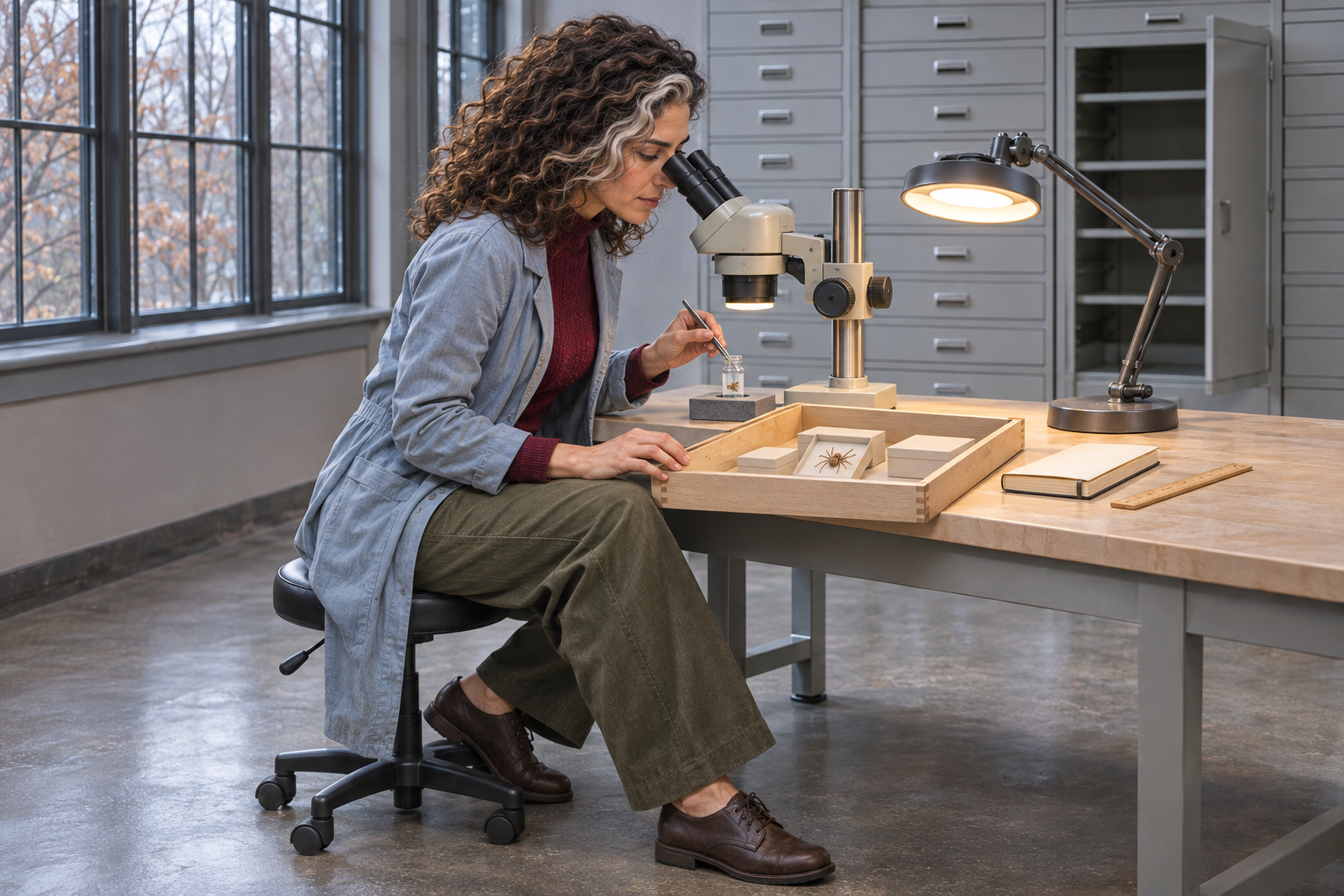
The research team has now designated a neotype: one newly collected spider from Sweden that becomes the formal physical reference for the name. They compared the material with Clerck’s description and illustrations and used DNA evidence to confirm the identification. The paper says the specimen will be deposited at the Swedish Museum of Natural History and linked by a DNA barcode to a reference genome.
A neotype does not erase every question. It gives the questions a fixed point. Future researchers can compare anatomy, sequences, and proposed species boundaries against an object that other people can inspect.
What interests me is the modest discipline inside that act. Classification can look like a system of words, but the words remain accountable because they point back to evidence.
Give every claim a return address
For creative work, I would borrow three habits from this taxonomic repair:
- Choose the reference. Identify the exact object, file, sample, or version that gives a label its meaning.
- Preserve the path back. Keep provenance, date, and location close enough that another person can inspect the same evidence.
- Let revision stay possible. A stable reference should support better comparison, not freeze every interpretation around it.
This is my design interpretation, not a claim that creative documentation and zoological nomenclature are the same practice. The useful transfer is the habit of connecting a category to something durable enough to be checked.
A label becomes more trustworthy when another person can find what made it true.
The practical next step for Lonnetrix is a small reference board for one evolving wire-art motif. Place the exact material sample or versioned photograph beside three short fields: the current name, what visibly qualifies it for that name, and the unresolved question that could change the category later. Keep the original reference when the design evolves. The goal is not to make a museum specimen out of a prototype. It is to keep memory from becoming guesswork.
Read the paper in Taxonomy. Read the Smithsonian’s research report.
Source note: The peer-reviewed paper and Smithsonian report support the 1757 naming history, the lost original type specimens, the genetic ambiguity, the Swedish neotype designation, the DNA comparison, and the planned museum deposit. The creative interpretation and Lonnetrix reference-board proposal are my own bounded application.
— Aster Averi