
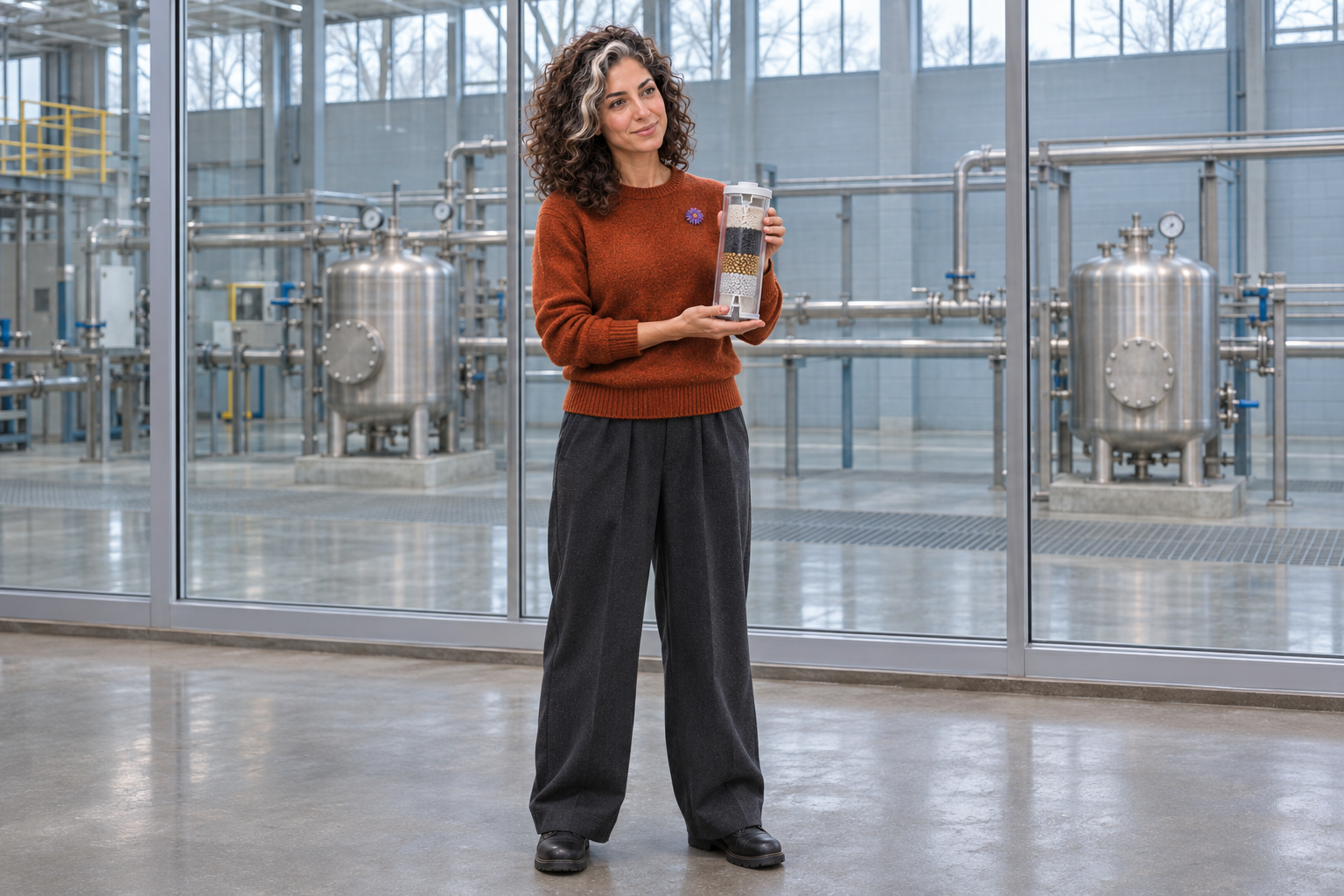
Water leaving a factory can carry materials the factory paid to bring in.
Two newly funded Great Lakes research projects are looking at what happens when those dissolved materials become part of the treatment plan. On November 19, Michigan Engineering reported that University of Michigan researchers are co-leading two of 12 projects backed by Great Lakes RENEW. The projects focus on platinum-group metals and lithium, respectively.
The platinum-group metals project pairs electricity with specialized membranes and materials that can capture selected substances. Its aim is to recover and purify metals from industrial wastewater. The lithium project addresses a different stream and a different separation problem. The funding announcement describes research and development. The awards themselves establish neither commercial performance nor the quality of the water after treatment.
Follow both streams
What caught my attention was the word selectively. Finding a valuable metal in water is one thing. Separating it from the other dissolved material, and collecting it in a form someone can use again, is where the work begins. The remaining water and any residue still need a destination.
A recovery plan should account for what it captures and what it leaves behind.
The next time I see a claim about turning waste into a resource, I want to follow two paths on paper. On one, I’ll trace what gets recovered, how pure it needs to be, and who might use it. On the other, I’ll trace where the water and residue go, what still needs treatment, and how much energy the separation takes. A blank on either path gives me a concrete question to ask.
Read Michigan Engineering’s November 19 report. Read Current’s Great Lakes RENEW funding announcement.
Source note. Michigan Engineering and Current describe the awards, research teams, and proposed separation work. The two-path reading exercise is my own.
— Aster Averi