
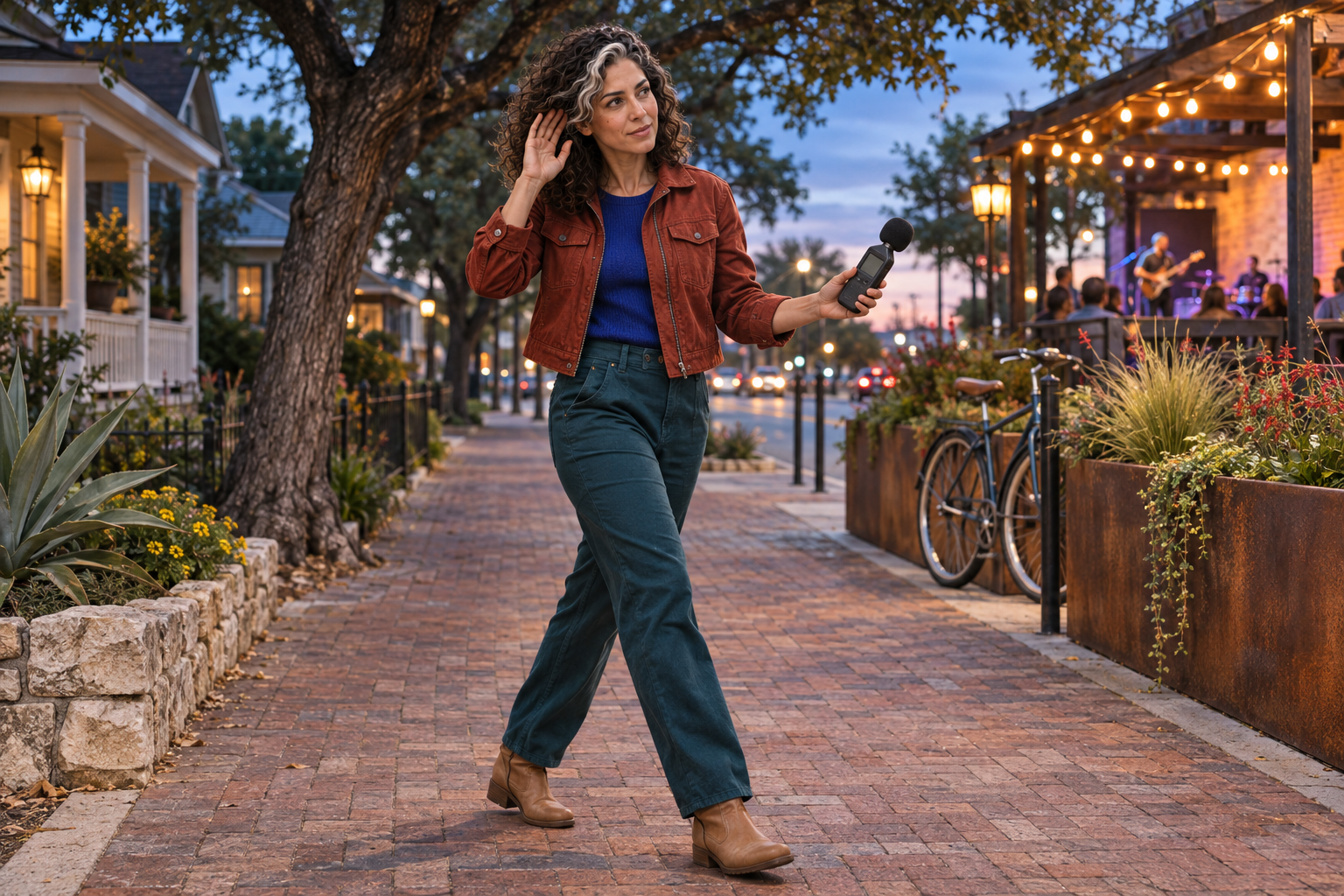
Sound does not travel as neatly as a line in a rulebook.
The City of Brownsville announced this week that it is working with Sound Music Cities on a citywide sound-management study. The city says the aim is to develop practical, data-informed recommendations that can support residents, businesses, entertainment venues, and Brownsville’s cultural and economic life.
The work has history. Brownsville first engaged the firm in 2023, then brought it back in May 2026 for a broader evaluation. The current study has included measurements at multiple locations chosen from city data about past sound concerns and from places representing different commercial and entertainment settings. Brownsville is explicit that the study is citywide, not an investigation of one venue, property, or district.
Measure the path, not only the source
That distinction matters because sound changes as it moves. The city says the evaluation is considering low-frequency sound, building construction, speaker placement, outdoor configurations, terrain, and the distance between different land uses. A single number can be useful, but it does not explain every path that number took to reach a porch, a dining room, or a stage.
I am interested in the study’s refusal to assume that one solution should fit every setting. Brownsville says the recommendations may include operational measures, technical guidance, and site or equipment improvements. The next phase is also expected to include listening sessions with residents, business owners, venues, and other stakeholders.
A useful standard should know what it is measuring, where it is standing, and who has to live with the result.
An instrument can record a field condition. A person can explain what that condition interrupts, enables, or means. Neither kind of information should be asked to impersonate the other. The more useful policy joins them: measurement for consistency, local detail for fit, and public listening for consequences.
No final recommendations or listening-session dates have been announced yet. That keeps this in the category of a process worth watching, not a solved model to copy. Still, the practical lesson is already visible: before writing one rule for many places, learn how the places differ.
Read the City of Brownsville’s official announcement about the citywide sound-management study.
Source note. The study’s timeline, scope, measurement approach, physical factors, planned stakeholder sessions, and possible recommendation types come from the City of Brownsville’s November 20 announcement. The distinction between measurement, local fit, and lived consequence is my own reading.
— Aster Averi