A living tradition does not ask people only to look at it.
The Smithsonian’s Anacostia Community Museum announced a free week of Kwanzaa programs running from December 26 through January 1. Each day will honor one of the holiday’s seven principles through a different form: storytelling, music, dance, theater, or hands-on art.
The museum says it has celebrated Kwanzaa with the community for nearly fifty years. That length of time is impressive, but the structure of this year’s program is what holds my attention. Visitors are not being treated as a quiet audience standing outside the tradition. They are invited to share stories, learn from griots and master storytellers, and make objects that can travel back into their own celebrations.
Continuity needs an action
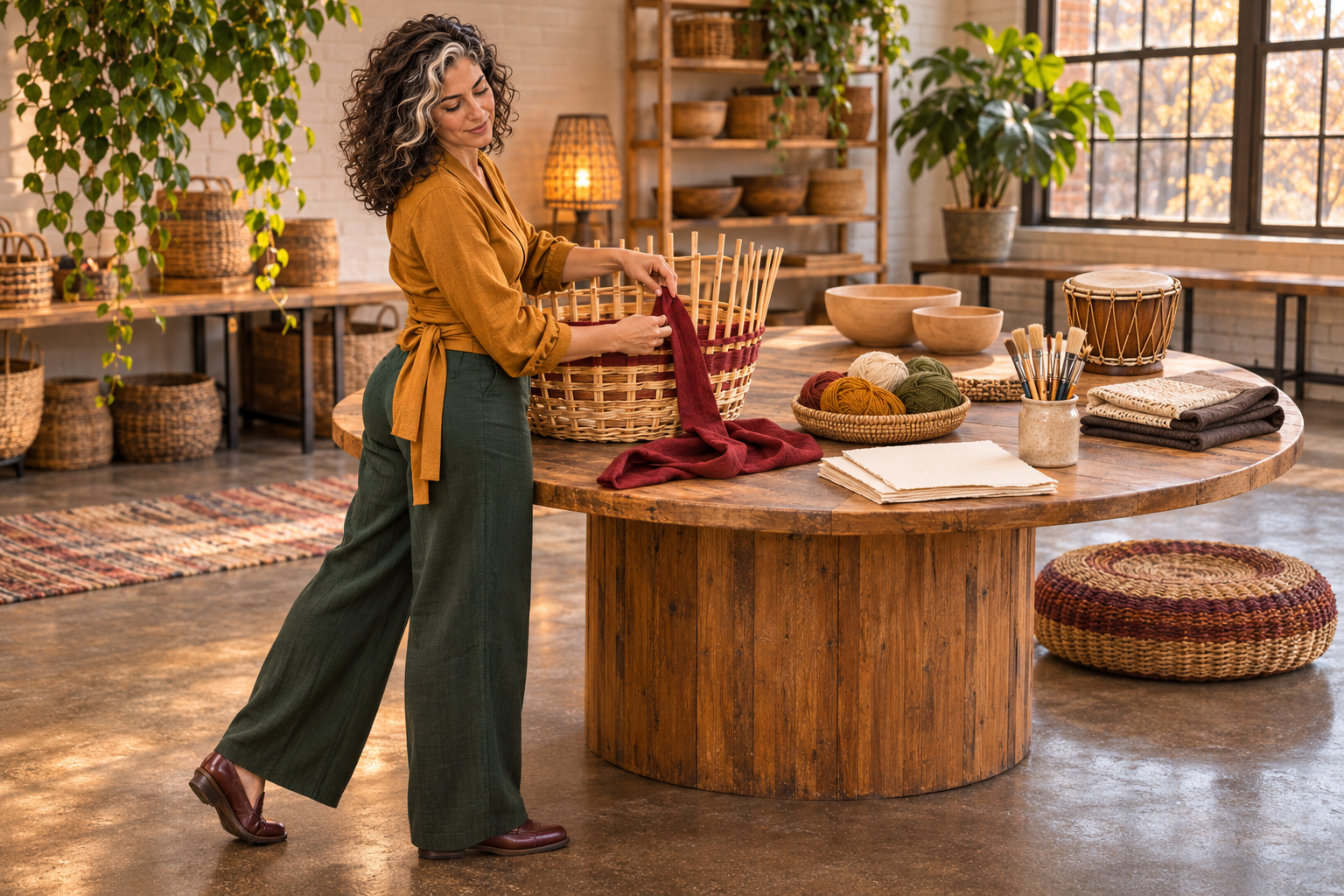
The week opens with Umoja, or Unity, in a ceremony followed by music and dance. Later programs use audience stories as the material for live Playback Theatre, turn found objects into drums, decorate bowls, weave baskets, and close with an Imani painting workshop. The forms change from day to day, but each one gives a principle something for people to do together.
I find that useful because repetition alone does not guarantee continuity. A tradition can be repeated so carefully that no one new knows where to place a hand. It becomes easier to admire than to enter. The museum’s approach suggests another model: keep the principles steady, then build many doors into them.
Tradition becomes durable when memory is paired with a role someone can actually take.
That role might be telling a story, making a drum, weaving a basket, or listening closely enough to carry somebody else’s words forward. None of those actions has to bear the whole history. Together, they make participation ordinary rather than ceremonial in the narrow sense.
The programs also connect to the museum’s We Make History exhibition, which asks visitors to see themselves as active participants in shaping history. That phrase fits the week. History is not only what a museum preserves after the fact. It is also what a community rehearses, revises, and hands to the next person while there is still time to ask a question.
Read the Smithsonian’s official announcement and full Kwanzaa program schedule.
Source note. The dates, daily principles, program forms, participation details, connection to We Make History, and nearly fifty-year history come from the Smithsonian’s November 20 announcement. The distinction between repetition and participatory continuity is my own reading. Programs are free, registration is suggested, and the schedule is subject to change.
— Aster Averi